Category: News
-
News
The Case for a U.S.-Led Military Alliance in Space
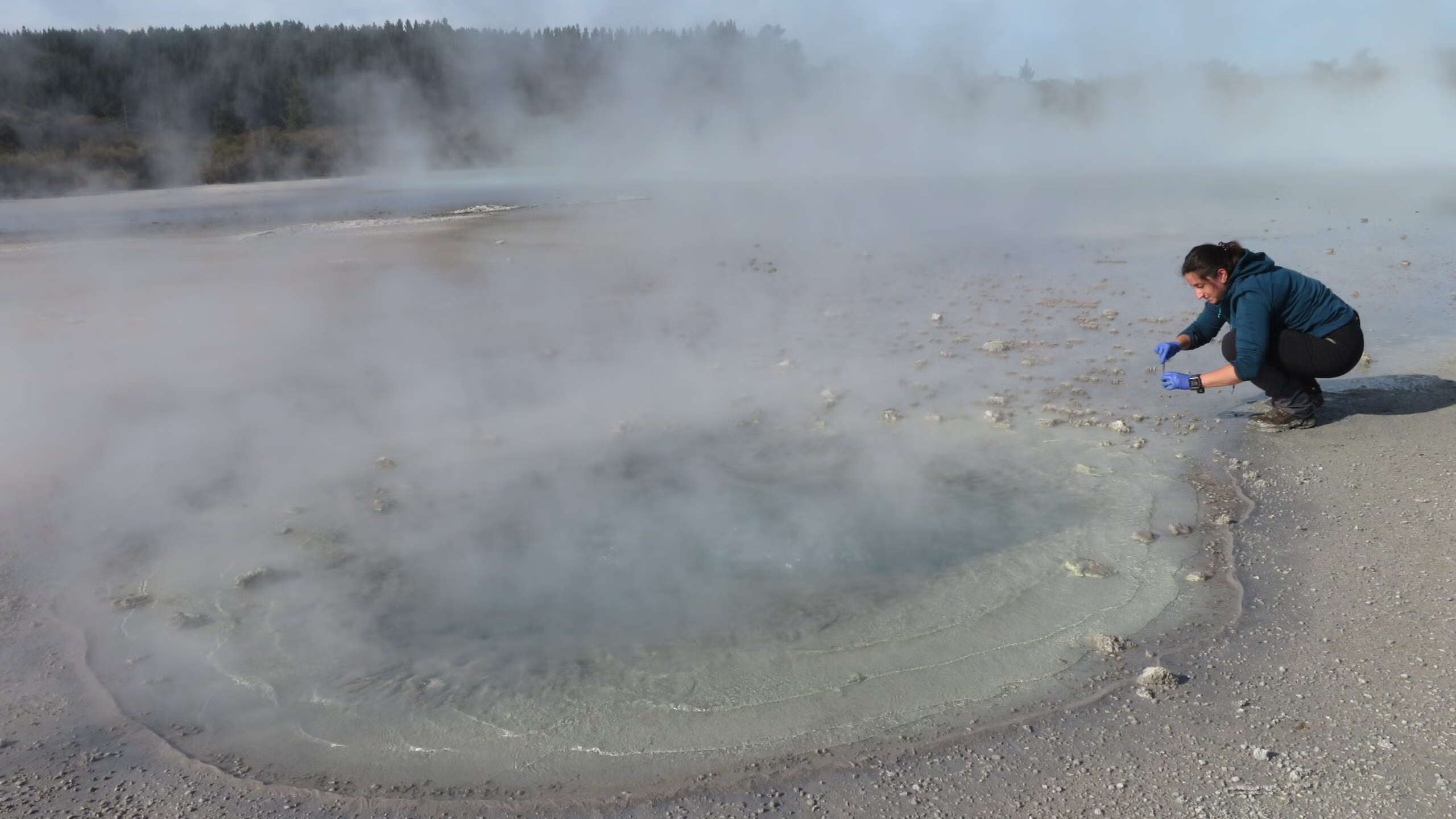
Far out in geosynchronous orbit, a Russian satellite moves through deep space. Cosmos 2553, nicknamed “Sput-nuke,” is designed to carry a nuclear payload that could render most satellites unusable. Meanwhile, China is pouring billions of dollars into developing advanced space capabilities, including anti-satellite weapons.

-
News
Why the Search for Life on Mars is More Complicated Than We Thought
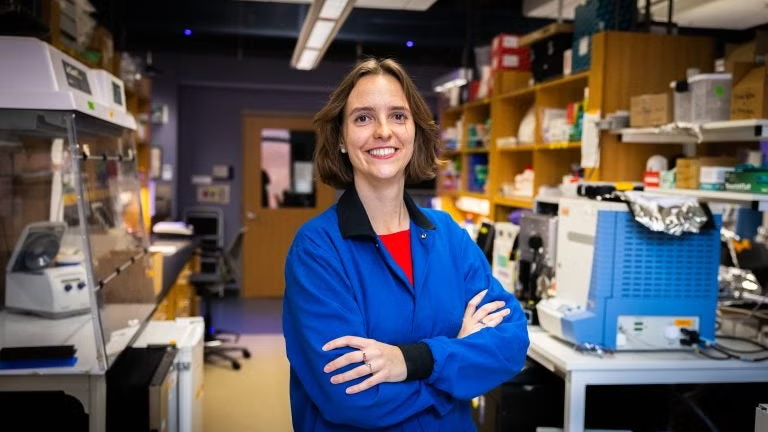
The search for life on Mars may have become more complicated because of the radiation from stars millions of light years away. These are the results of a new study published by Anais Roussel (G’24), a postdoctoral researcher and organic geochemist at Georgetown. Roussel studies how cosmic radiation from supernovae affects biomarkers that could point to the existence of past life on Mars, which is inhospitable to current life due to its freezing temperatures, high levels of radiation and dry climate.
-
News
Shaping the U.S. Space Launch Market Extending America’s Advantage
The United States leads the world in space launch by nearly every measure: number of launches, total mass to orbit, satellite count, and more. SpaceX’s emergence has provided regular, reliable, and relatively affordable launches to commercial and national security customers. However, today’s market consolidation coupled with the capital requirements necessary to develop rockets may make it difficult for new competitors to break in and keep the space launch market dynamic.

-
News, Students
GUSI @ American Geophysical Union in DC!
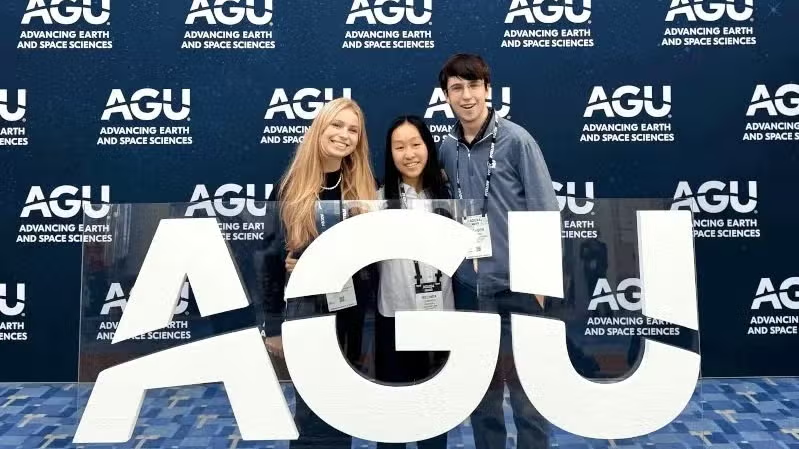
This week, GUSI students Owen Chbani, Anna Kelly, Belinda Li, Jackson Schnabel, and Vaibhavi Mahajan attended the American Geophysical Union (AGU) Annual Meeting, which attracted over 30,000 Earth and space scientists, students, policymakers, and advocates from around the world.
-
Faculty, News, Research
CCT Professor Evan Barba’s Research with the NASA-Satellite Servicing Projects Division
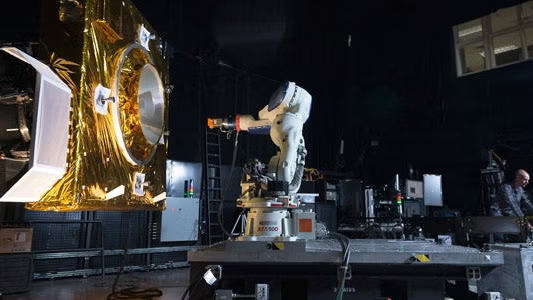
Life on earth has become dependent on orbital satellites. Telecommunications, weather, and imaging satellites provide services and data that we rely on in the course of our daily lives, and that doesn’t even touch on more specialized or sensitive areas like national defense or scientific research into climate change or space exploration. Many of these satellites become obsolete in a matter of a two or three decades because they run out of fuel or succumb to technological obsolescence, but what if they could be refueled or upgraded while still in orbit? While it is too dangerous and difficult for astronauts…
-
News
The Caretakers of the Observatory: Lifting Off With Georgetown’s Astronomical Society
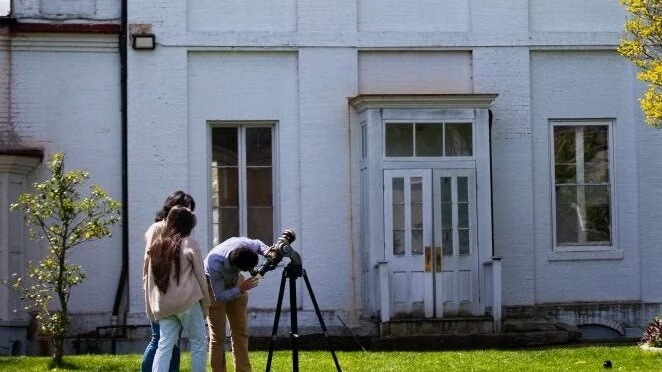
On any clear Tuesday night on a hilltop that overlooks the Hilltop, you may notice students gathered outside the Heyden Observatory with telescopes pointed to the heavens.
-
News, Research
Blinded by the light: How bad are satellite megaconstellations for astronomy?
“We are just beginning to appreciate how bad the disruption can be for land-based and space-based telescopes, and as more and more satellite overflights occur, the problems will only intensify.”

-
Faculty, News, Research
Reaching into the Night: Exploring the Cosmos with Sarah Johnson
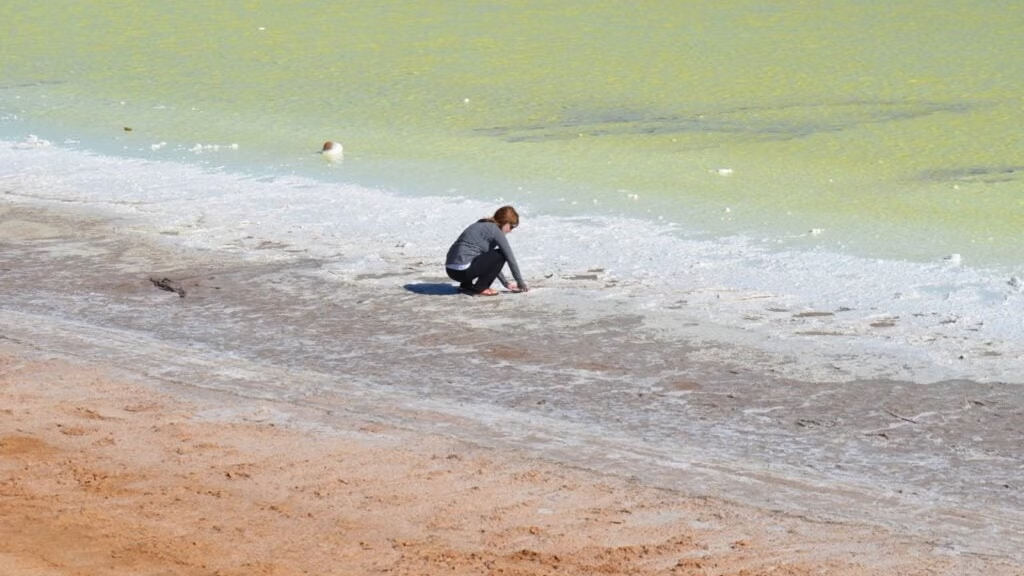
Whether in the farthest reaches of our solar system, her lab on the Hilltop or her New York Times bestselling book, Professor Sarah Johnson seeks out signs of life — and connection.
-
News, Research
Called To Be a Space Biologist, Postdoc Participates in Selective NASA Program
Georgetown postdoctoral fellow Geraldine Vitry, PhD, spent the first years of her educational career focused on human biology. A pivotal moment led her to her true passion, space biology. Now, a NASA program is putting her a step closer to realizing her goal of contributing to humans walking on Mars.
-
Faculty, News, Research
Postdoctoral Fellow Maëva Millan and Professor Sarah Stewart Johnson Conduct First-of-Its-Kind Research Searching for Organic Molecules on Red Planet
In a paper published in Nature Astronomy, Georgetown Postdoctoral Fellow Maëva Millan and her advisor, Sarah Stewart Johnson, Provost’s Distinguished Associate Professor in the Department of Biology and Science, Technology, and International Affairs Program, share their findings from the very first “wet chemistry derivatization” experiment performed on Mars, where NASA’s Curiosity Rover landed in August 2012.