Category: News
-
Faculty, News, Research
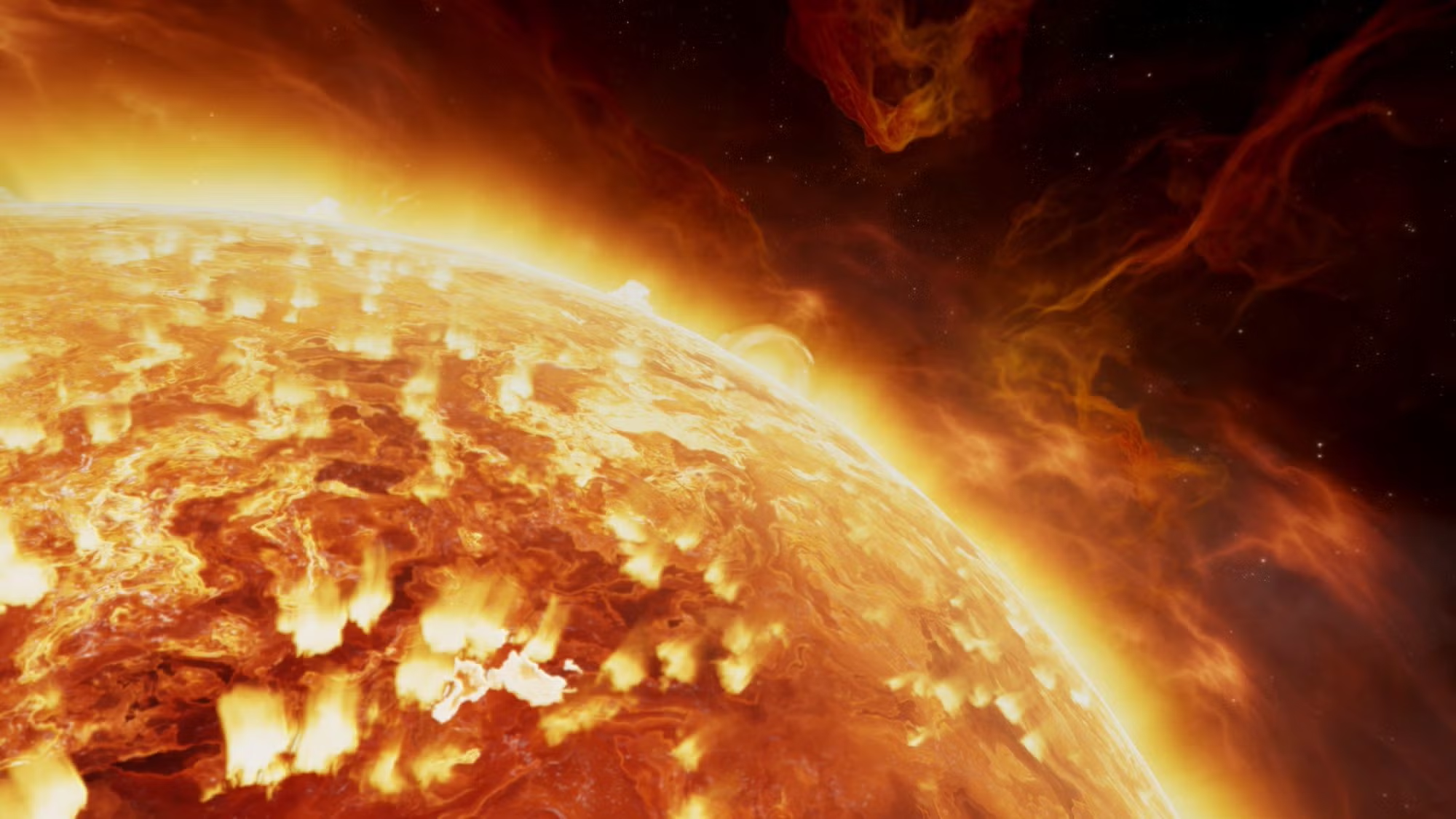
How Space Shapes Human History and Why the Future May Be in Asteroids
This story is a part of our Ask a Professor series, in which Georgetown faculty members break down complex issues and use their research to inform trending conversations, from the latest pop culture hits to research breakthroughs and critical global events shaping our world.
-
Announcements, News, Students
SFS to Launch Space Studies Concentration
The Georgetown University Edmund A. Walsh School of Foreign Service (SFS) approved a new space studies concentration as part of its science, technology and international affairs (STIA) program Nov. 5.
-
News
Ripples on the Cosmic Ocean
What happens in space doesn’t stay in space. Historian Dagomar Degroot joins Planetary Radio host Sarah Al-Ahmed to explore how shifting solar cycles, volcanic eruptions on Venus, Martian dust storms, and even mistaken sightings of lunar forests have influenced life, science, and society on Earth.

-
News, Students
‘The Limit is Past the Sky’ for Ph.D. Student Seeking Extraterrestrial Life
Kenzie Mounir (G’30) is used to having to explain astrobiology to others. More often than not, she’s met with blank stares.

-
News
Garden of the Stars
When students returned to Georgetown this fall, many stepped into new spaces and new buildings across campuses. The university opened residences for junior and seniors on the Hilltop Campus and a sprawling headquarters for the School of Continuing Studies, Earth Commons Institute, Capitol Applied Learning Labs (CALL) and other academic programs on the Capitol Campus. […]

-
News
The Final Frontier is Closer Than You Think
That asteroid that obliterated the dinosaurs 66 million years ago? It cleared the stage for mammals—and eventually us. The solar shifts that melted the ice sheets 12,000 years ago? They made civilization possible.

-
News
Sustaining the U.S. Edge in Remote Sensing, Launch, and Advanced Technologies for National Security
This report examines how U.S. leadership in remote sensing, launch, and advanced space technologies has shaped the global space economy and what it will take to sustain that edge. Drawing on CSET’s prior research, the paper explores the role of public investment and technology, the risks of market consolidation, and policy steps to foster innovation, resilience, and national security in an increasingly contested and commercialized space domain.

-
News, Students
Space Detectives: Students Use Satellite Data to Address Climate Change
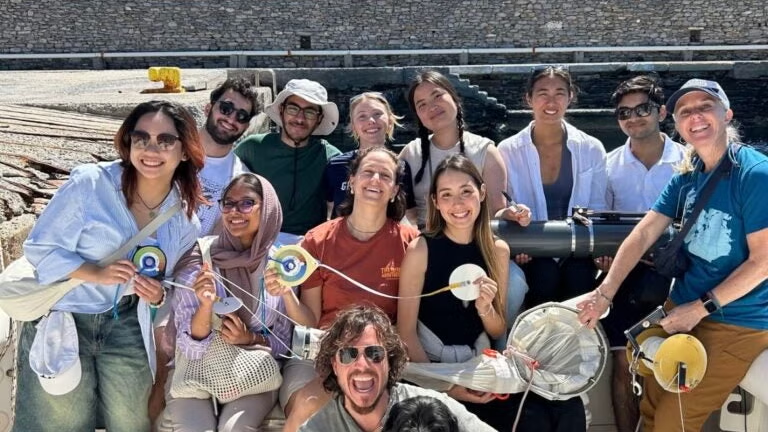
Summer break meant diving into marine research, hiking Greek islands, and using space tech to track climate change for rising Georgetown University in Qatar (GU-Q) juniors Adeena Hossain, Gwyneth Estomo, Tuan Nguyen, Raikhan Primbetova, and Saroosh Zahid. They were selected to participate in an intensive two-week summer course, Sensing Marine Ecosystem Health & Climate Impacts from Space, organized by Georgetown’s Earth Commons Institute, in collaboration with the National and Kapodistrian University of Athens (NKUA).
-
News
AI on the Edge of Space: Securing Space Superiority and Avoiding Surprise in Orbit
The accelerating commercialization of satellites and launch technologies means space is now more congested, contested, and operationally limited than ever. This drives an imperative to leverage emerging technologies such as artificial intelligence to observe, orient, protect, and if needed, for defense. This report surveys the technology landscape to understand how AI can be applied to space domain awareness and orbital warfare.

-
News
Advanced Space Technologies: Challenges and Opportunities for U.S. National Security
The United States is home to a growing set of companies building advanced space technologies, from lunar landers to satellite servicing systems. These firms are taking on missions once led by government and developing capabilities the government does not yet field. But limited profitability, export restrictions, and free government services may constrain growth unless targeted investments and smart policies help sustain a dynamic, secure commercial space sector. This report explores the U.S. advanced space technologies industry and highlights challenges and opportunities the state of the industry presents for national security.
