Spend your summer at the forefront of space science at NASA Goddard Space Flight Center just outside Washington, D.C.! This immersive research experience enables Georgetown undergraduates to work alongside scientists and engineers at one of NASA’s premier centers for astrophysics, planetary science, Earth science, and satellite technology.
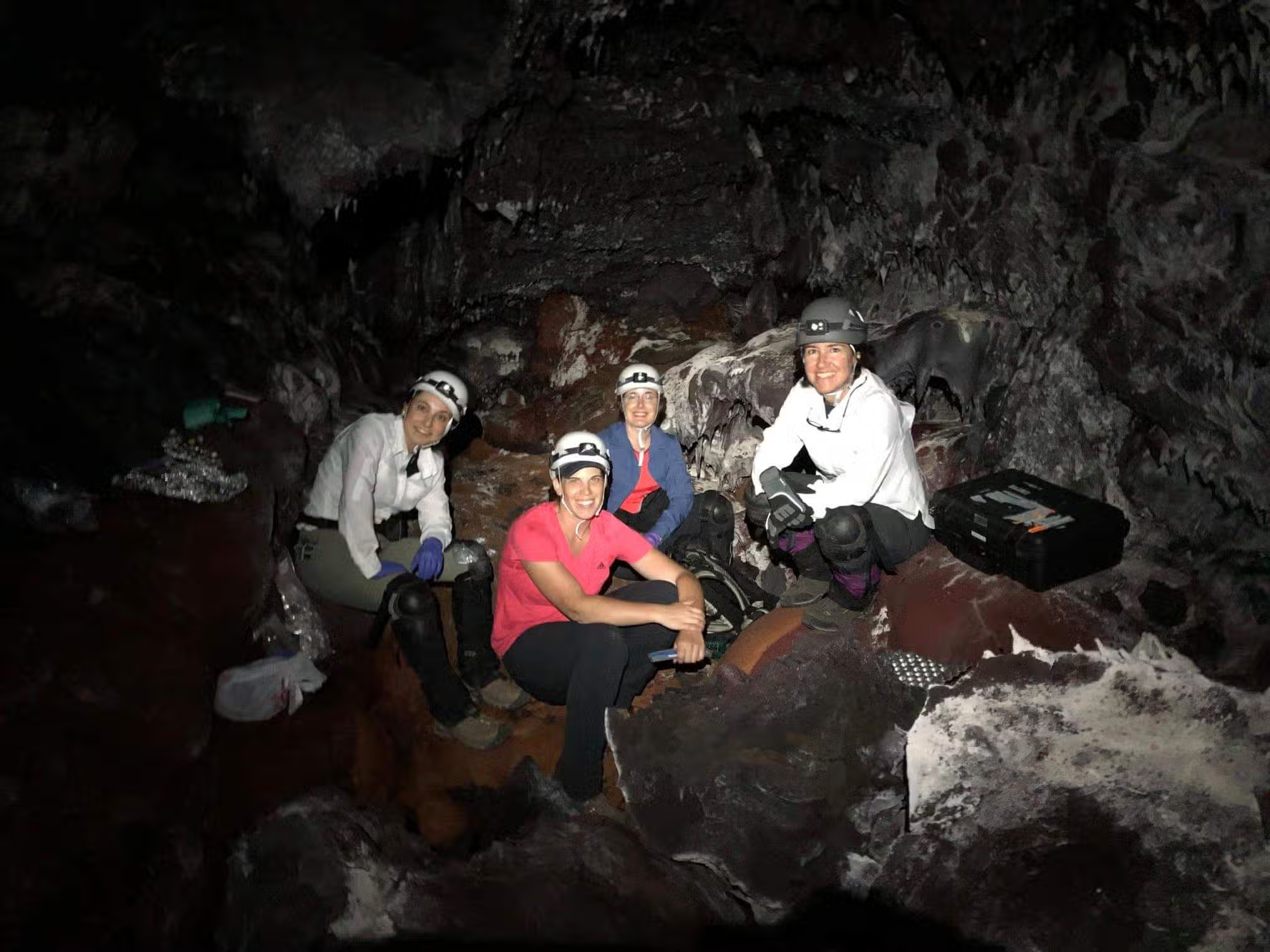
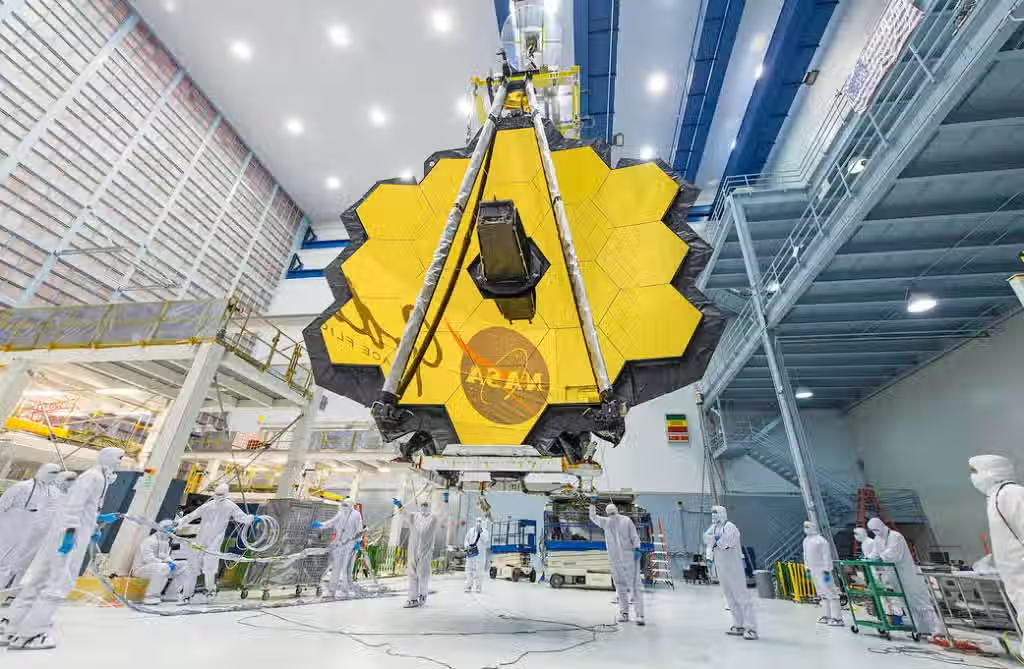
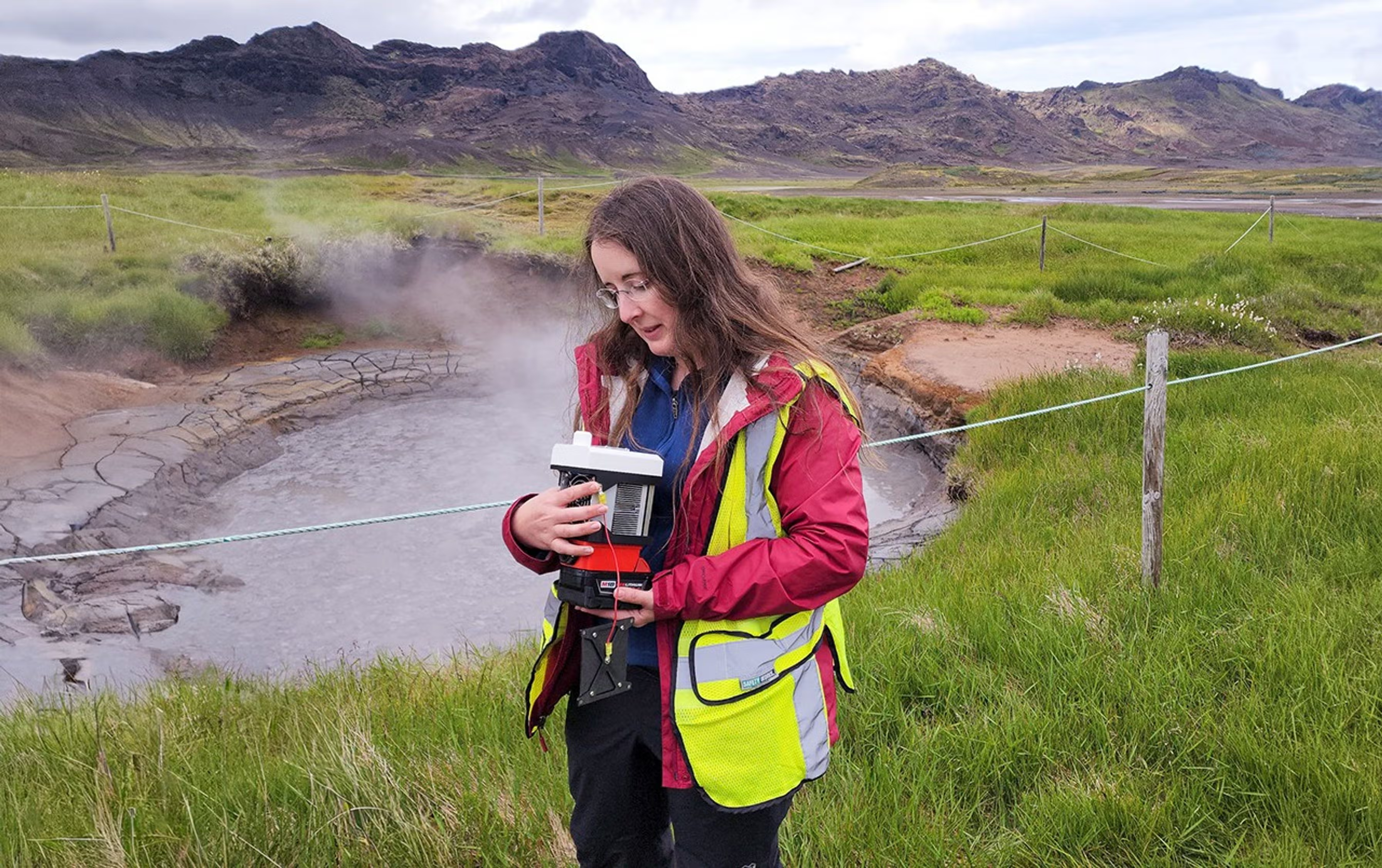
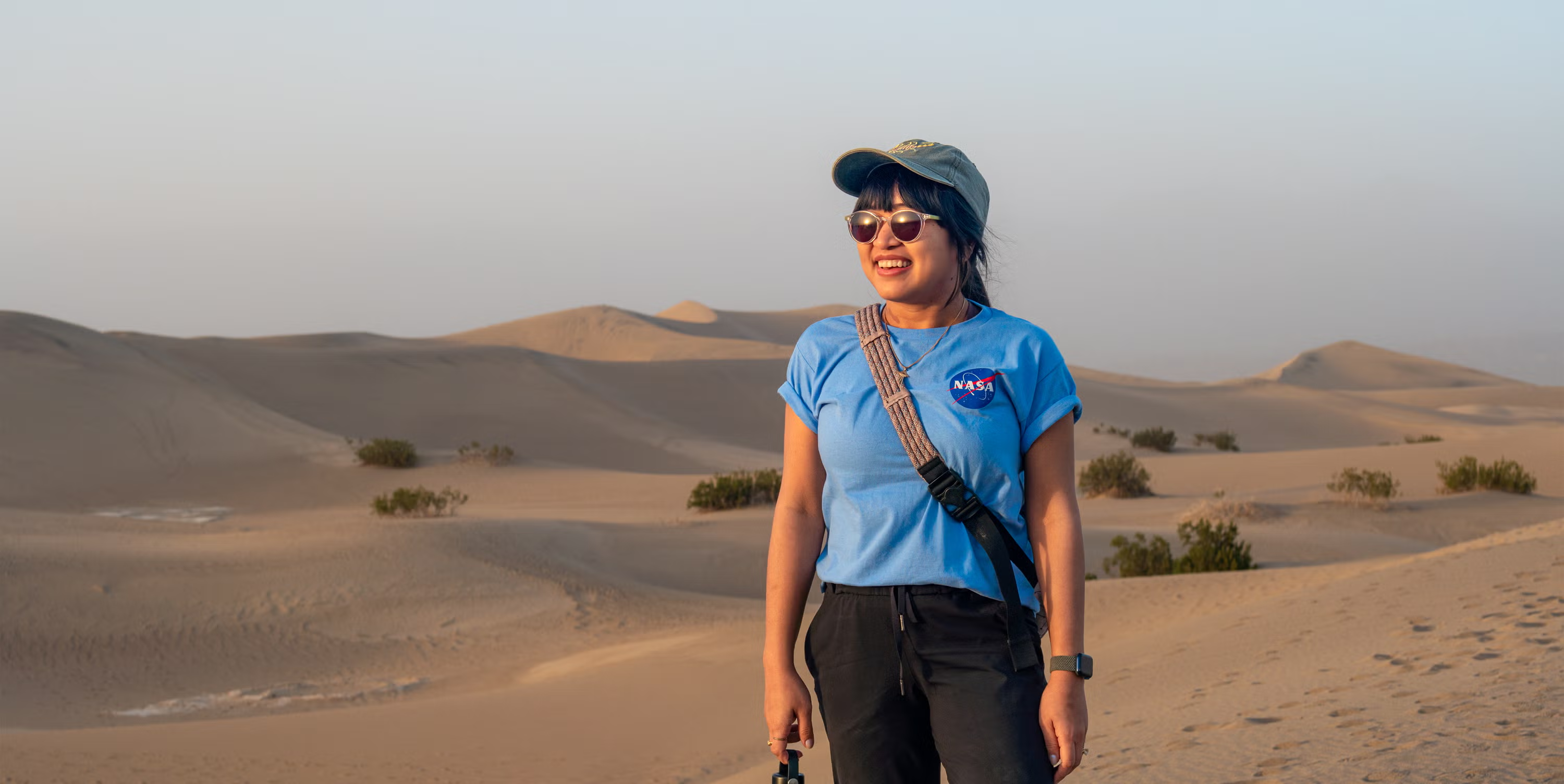
Overview
The new Georgetown-Goddard living-learning internship program strengthens the collaboration between Georgetown’s space studies program collaboration and NASA by connecting students directly with ongoing research at NASA’s Goddard Space Flight Center. Each participant is matched with a NASA mentor and joins an active research team, contributing to projects aligned with both their academic interests and mission priorities at the center.
Students will gain hands-on experience in areas such as planetary science, life detection instrumentation, mass spectrometry, and space systems engineering while building professional networks within the broader NASA community.
Students will receive a competitive $6000 stipend for the summer. Housing on Georgetown’s campus is included, as well as use of a vehicle for daily transportation to NASA’s Goddard Space Flight Center in nearby Greenbelt, Maryland.
Program Experience
This is an opportunity to move beyond the classroom and into the operational heart of NASA science. Whether analyzing spacecraft data, contributing to mission design, or supporting cutting-edge instrumentation, students will gain direct exposure to how space science is conducted while representing Georgetown within one of the nation’s most exciting space research environments. As a cohort, students will also have the chance to participate in professional development and activities that strengthen peer connections.
How to Apply
Applications will be reviewed on a rolling basis, and early submission is strongly encouraged.
Deadline: Friday, May 1, 2026 at noon ET.
To apply, please submit:
- A 1–2 page CV
- A 1-page cover letter
Send materials to undergradresearch@georgetown.edu with the subject line:
“NASA Goddard Summer Research Application”
In your email, please also include your availability for interviews on Monday, May 4th, 2026 between 9-1pm ET.
Eligibility
Applicants must be currently enrolled Georgetown University students and US citizens.
No previous space research experience is required. We are looking for students who are:
- Curious and intellectually engaged
- Collaborative and adaptable
- Professional and self-directed
- Interested in contributing to a dynamic scientific research environment
Frequently Asked Questions
Who are the mentors?
The NASA Goddard mentors include Amy McAdam, Will Brinckerhoff, Heather Graham, and Melissa Trainer as primary mentors and David Burtt, Jen Stern, Lu Chou, and Mike Thorpe as supporting mentors. Have a look at these links to find out more about their research labs! The Georgetown Program Coordinator is Shauna Bennett.
What kind of research will I be doing?
Summer research projects will vary from analyzing planetary analog samples to interpreting molecular signs of life to engineering the next generation of spacecraft instruments. Each project will
be designed to meet the needs and experience of the students selected.
What are the program dates?
The program dates are May 31st to August 1st (nine weeks). One internship (the Trainer placement) is shorter at just six weeks (May 31st to July 12th), and for that placement, the stipend will be prorated accordingly.
Is housing provided?
Yes. Housing is provided on Georgetown’s campus.
Can I apply if I’ve already applied for the CRF Summer Research Fellowship?
Yes. Students may apply to both opportunities, though students cannot receive funding from both programs.
What does the selection process involve?
Applications are reviewed based on submitted materials. A subset of candidates will be invited to interview as part of the selection process.
What should I include in my cover letter?
Describe your academic background, research interests, and what draws you to this opportunity. You should also explain how this experience could fit into your broader academic and career goals. While not required, if you happen to have background coursework or research experience in planetary science, biology, earth or environmental science, or chemistry (particularly mass spectrometry), please include this information, too.
